Buddhism as a world religion has its geographical origins in a relatively small area of eastern India and southern Nepal — a region where, 2,500 years ago, one human being's pursuit of truth under a fig tree set in motion a transformation of human consciousness that has reached into every corner of the world.
The four principal Buddhist pilgrimage sites — the places most directly connected to the life of Siddhartha Gautama — form what is called the Buddhist Circuit, and visiting them is one of the most profound journeys a person can make, regardless of their personal religious beliefs.
The circuit begins at Lumbini, in southern Nepal: the birthplace of Prince Siddhartha. Lumbini is a UNESCO World Heritage Site, and its centrepiece is the Maya Devi Temple, built at the exact spot where Queen Maya gave birth to the future Buddha under an asoka tree. The most tangible connection to ancient history here is the Ashoka Pillar, erected by the Buddhist emperor Ashoka in 249 BC, bearing an inscription that identifies the site as the birthplace of Buddha. Around the temple, an international garden of Buddhist nations' monasteries and shrines has been created over the past decades — Thai, Japanese, Korean, Chinese, Tibetan, German, Sri Lankan — each architecturally distinct, each representing the extraordinary cultural range of a tradition that has taken root in every continent.
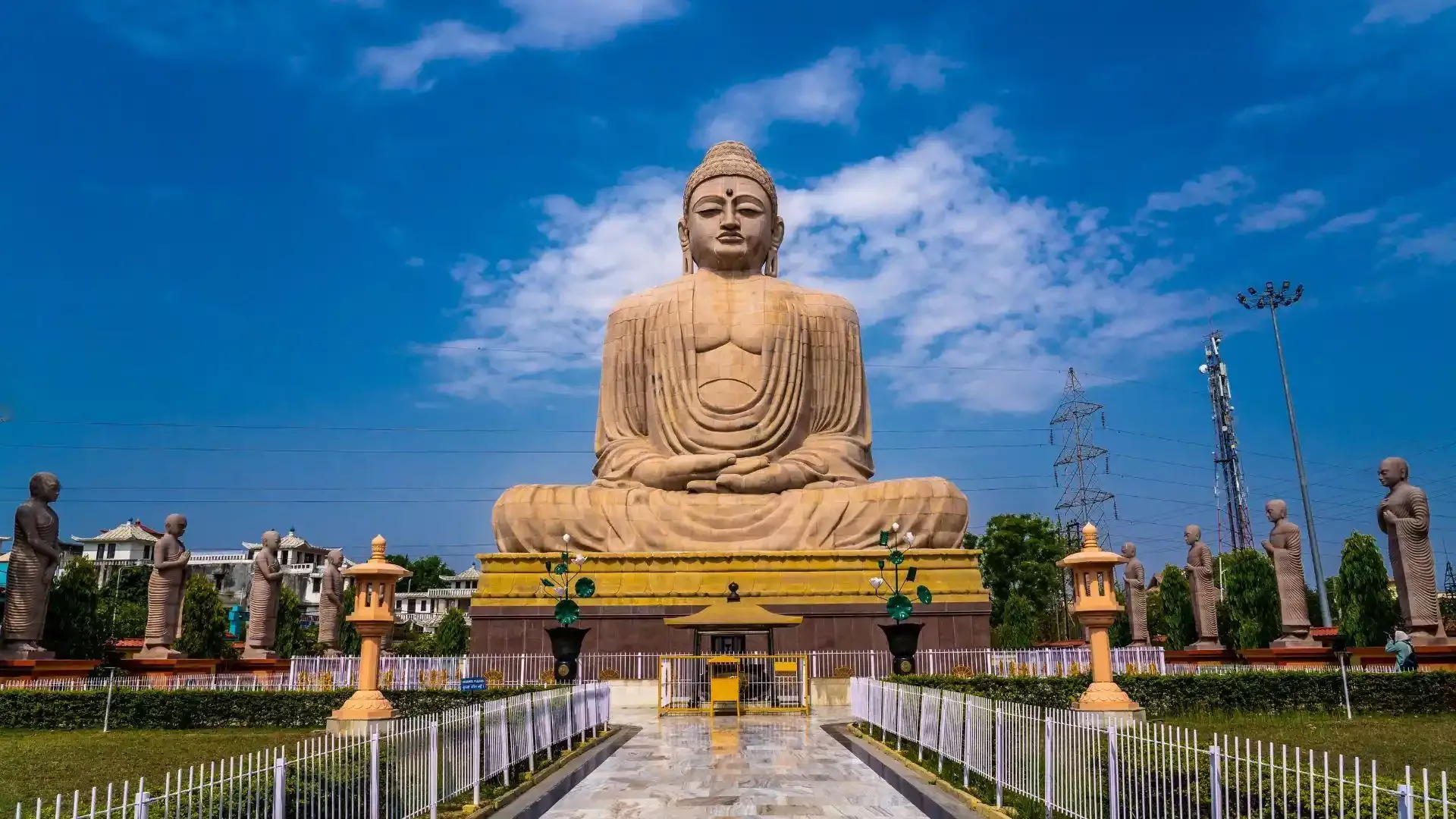
From Lumbini, the circuit moves to Bodhgaya, Bihar: the site of the Enlightenment. Here, beneath the sacred Bodhi Tree, within the magnificent Mahabodhi Temple complex (another UNESCO World Heritage Site), the most sacred moment in Buddhist history is honoured by thousands of pilgrims daily. The atmosphere at Bodhgaya is extraordinary — a constant hum of prayer and meditation, monks and nuns from every school of Buddhism, the scent of incense and the sound of Tibetan horns at dawn.
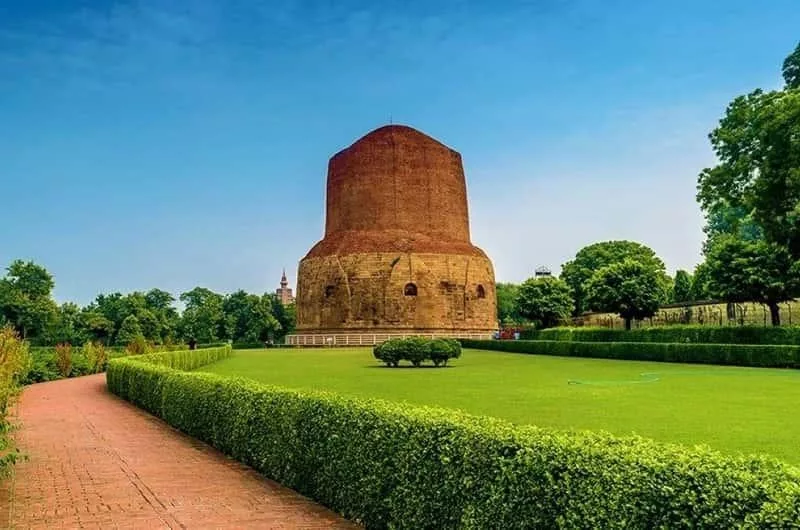
The third site is Sarnath, near Varanasi: where the newly enlightened Buddha delivered his first sermon to five disciples in the Deer Park. The Dhamek Stupa — a massive cylindrical structure built by Ashoka and enlarged in the fifth century AD — marks the spot of this First Turning of the Wheel of Dharma. The Sarnath Archaeological Museum houses the Ashoka Lion Capital — the emblem that independent India adopted as its national symbol, chosen as an image of the Buddha's compassionate roar of truth.
The circuit ends at Kushinagar, Uttar Pradesh: the site of the Parinirvana, the final passing of the Buddha at the age of eighty. The Parinirvana Temple, a simple and extraordinarily moving structure, houses a six-meter recumbent Buddha statue showing the Enlightened One in the moment of final release. Outside, the Ramabhar Stupa marks the cremation site. The atmosphere here is perhaps the most contemplative on the entire circuit — quieter than Bodhgaya, less crowded than Sarnath — a place of completion and release.
Positive India Journey's Buddhist Pilgrimage Tour covers all four principal sites, plus additional important locations including Rajgir, Nalanda, and the great Tibetan monastery complex at Tawang. It is a journey that pilgrims of every tradition describe as transformative.