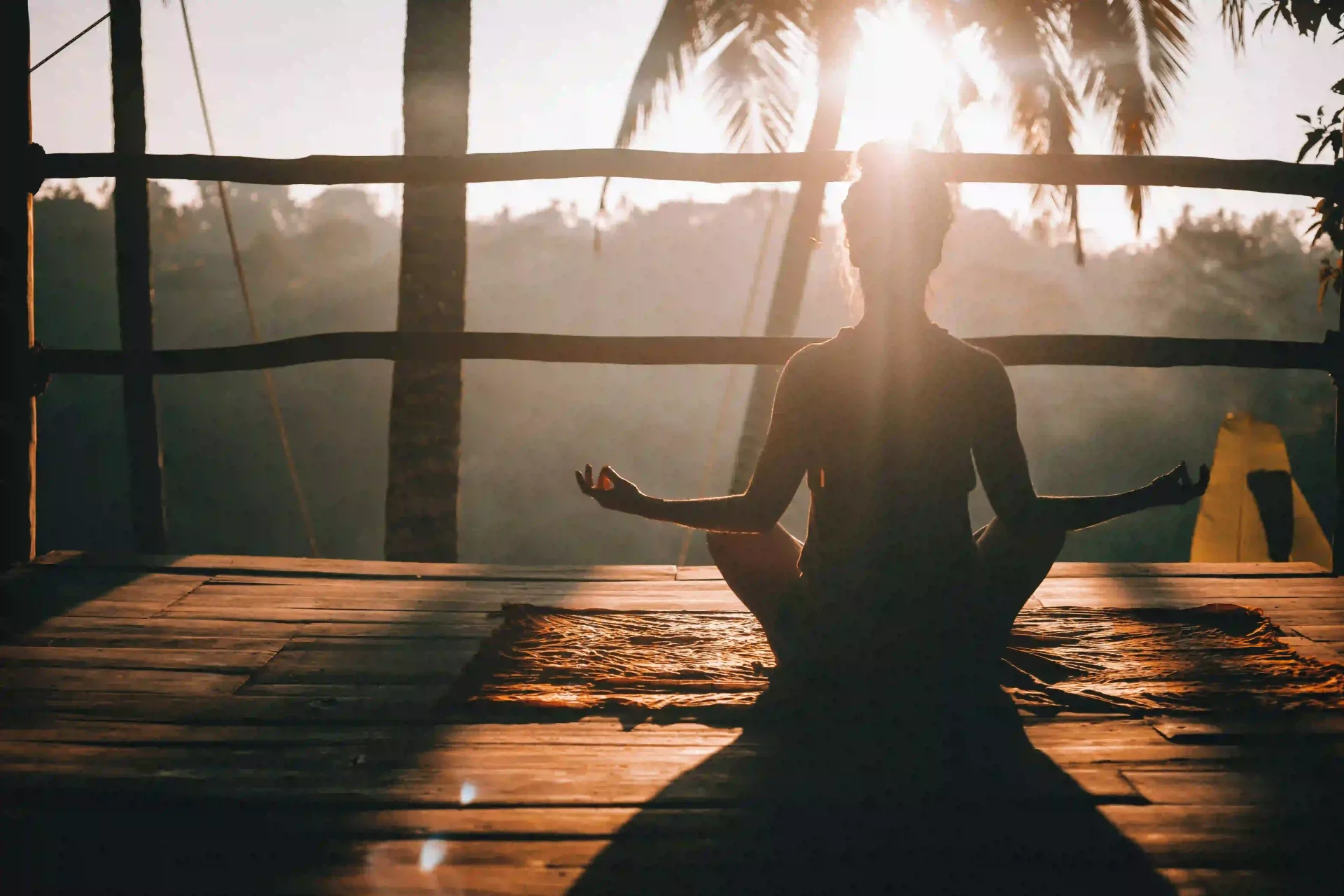
There is a particular quality to the light in Rishikesh at six in the morning. It comes from the east, over the Himalayan foothills, turning the river to hammered copper and the ashram walls to warm ochre. In this light, on a wooden platform five meters above the Ganges, surrounded by the sound of the river and the distant bells of a temple, yoga feels different than it does anywhere else on Earth.
Rishikesh calls itself the Yoga Capital of the World, and the title is not unearned. The town sits at the confluence of several mountain rivers, in the foothills of the Garhwal Himalayas, at the point where the Ganges emerges from the mountains onto the plains. For centuries, it has been a place of tapas — yogic austerity — where saints and sages have come to practice and teach. Swami Sivananda founded his Divine Life Society here in 1936, establishing an ashram that became one of the most influential centres of classical yoga teaching in the twentieth century. The Beatles came to study Transcendental Meditation at Maharishi Mahesh Yogi's ashram in 1968, and Rishikesh's fame as a centre of yoga and meditation has only grown since then.
But the town that exists today is more complex than the brochure version. Alongside the ancient ashrams and the genuine masters, there are also hundreds of yoga teacher training courses of varying quality, cafes serving acai bowls and Himalayan chai, and a growing adventure-tourism industry offering white-water rafting, bungee jumping and zip-lining. The challenge for the serious practitioner is to find the authentic thread running through all of this.
Positive India Journey's Yoga & Meditation Tour is designed around this challenge. We work with certified yogacharyas from established lineages — teachers who have practised for decades, not months — and we arrange sessions in settings of genuine spiritual power: the riverside platforms at dawn, the forest clearings above the town, the ancient Neelkanth Mahadev temple in the jungle.
A typical morning on our Yoga Tour begins at 5:45 AM with pranayama — the yogic science of breath — beside the river. The practices taught are classical: nadi shodhana (alternate nostril breathing), kapalabhati (skull-shining breath), ujjayi (the victorious breath). These are not warm-up exercises but profound practices in their own right, affecting the nervous system, the quality of attention, the relationship between body and mind.
Asana practice follows: two hours of classical hatha yoga, with careful attention to alignment and internal awareness. This is yoga as it has been practised in India for millennia — not as fitness training but as a method of preparing the body and mind for meditation.
And then there is the meditation itself. Sitting beside the Ganges, in the early morning quiet broken only by birdsong and the river's voice, with the mountains above and the ancient town below — the practice of dhyana, of sustained, quiet attention to the present moment — reveals something that no description can adequately convey. You have to be there. That is the whole point.